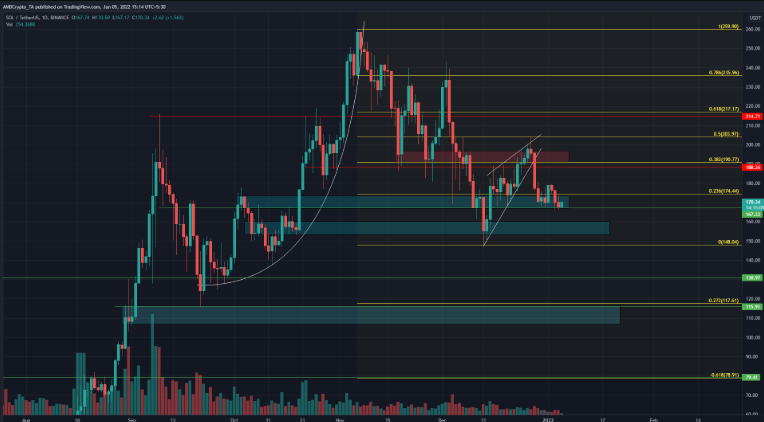
Introduction: Understanding Price Trends
When tracking the solana current price, you may notice that price often stops, reverses, or slows down at certain levels. These areas are known as support and resistance, and they play a major role in technical analysis.
For beginners, learning to spot these levels helps explain why prices move the way they do and reduces emotional decision-making.
What Is Support in Solana Current Price?
Definition of Support
Support is a price level where the solana current price tends to stop falling and bounce upward. This happens because buyers see the price as attractive and step in to buy.
Why Support Forms
Support forms when:
- Buyers believe SOL is undervalued
- Past price reactions occurred at that level
- Demand increases faster than selling pressure
Support represents a psychological and economic floor.
What Is Resistance in Solana Current Price?
Definition of Resistance
Resistance is a price level where the solana current price struggles to move higher. At this point, sellers begin to dominate and push the price down.
Why Resistance Exists
Resistance often appears because:
- Traders take profits
- Investors believe SOL is overpriced
- Previous highs attract selling pressure
Resistance acts like a ceiling for price movement.
How to Identify Support and Resistance Levels
Using Historical Price Data
The simplest way is to look for areas where the solana current price:
- Repeatedly bounced upward (support)
- Repeatedly fell downward (resistance)
The more times price reacts at a level, the stronger it becomes.
Round Numbers and Psychological Levels
Prices like $50, $100, or $150 often act as support or resistance because traders naturally focus on round numbers.
Trendlines and Channels
Uptrends
In an uptrend, support moves higher over time. This shows growing demand and rising confidence.
Downtrends
In a downtrend, resistance moves lower. This reflects weakening demand and continued selling pressure.
Trendlines help visualize these movements in the solana current price.
Support Becoming Resistance (and Vice Versa)
When the solana current price breaks below a support level:
- That level often turns into resistance
When price breaks above resistance:
- That level may become new support
This role reversal is common in trending markets.
Why Support and Resistance Matter for Beginners
Understanding these levels helps you:
- Avoid buying at local highs
- Avoid selling during panic dips
- Recognize potential trend changes
They provide structure to otherwise chaotic-looking price charts.
Common Mistakes When Using Support and Resistance
Treating Levels as Exact Numbers
Support and resistance are zones, not precise lines.
Ignoring Volume Confirmation
Breakouts with low volume are less reliable.
Frequently Asked Questions (FAQs)
1. Can support and resistance fail?
Yes, strong market forces can break any level.
2. How many times must price touch a level?
Two or more reactions usually confirm a level.
3. Do support and resistance work on all timeframes?
Yes, but higher timeframes are more reliable.
4. Should beginners trade based on these levels?
They should use them as guidance, not guarantees.
5. Is support stronger than resistance?
Neither is stronger; both depend on market conditions.
6. Can news break support and resistance?
Yes, major news often causes strong breakouts.
Conclusion
Support and resistance help explain the structure behind the solana current price. Instead of reacting emotionally, these levels allow beginners to understand where buyers and sellers are most active.
With practice, spotting trends becomes easier and more intuitive.