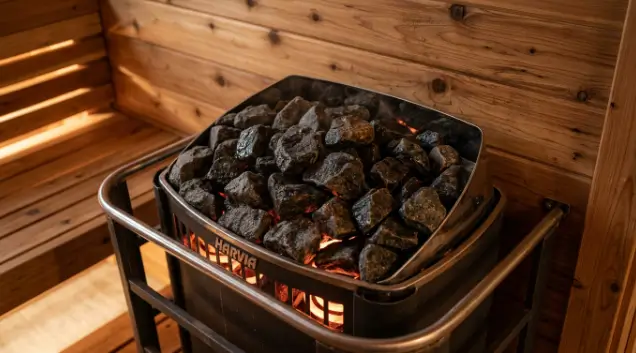
Winter tends to be the most practical season to own a small-space sauna heater, not because it runs differently, but because the cost per session stays modest even with colder outside temperatures, some retailers discount packages during the slower outdoor-living season, and the contrast between a hot cabin and cold air outside is a big part of why people use a sauna in the first place. A 6 kW heater in a well-insulated small cabin typically costs $0.50 to $1.50 per session to run, winter or summer.
Does a sauna heater actually cost more to operate in cold months?
Slightly, yes, but less than most people assume. A well-insulated small cabin loses heat to the surrounding cold air at a higher rate in winter than in summer, so the heater’s thermostat cycles on somewhat more often to hold the target temperature. For a properly sized 6 kW to 9 kW unit in a tight, well-sealed space, this typically adds a modest amount to the per-session electricity cost rather than a dramatic one. The bigger cost driver is insulation quality, not season. A poorly insulated cabin costs more to run year-round, while a well-built small space keeps winter operating costs close to summer levels.
What does a typical winter session actually cost?
A 6 kW heater draws its full rated wattage mainly during heat-up, then cycles on and off to maintain temperature once the room reaches its target range. Across a 45 to 60 minute session including heat-up time, total electricity use commonly lands in the range of $0.50 to $1.50 depending on local utility rates, with colder outside temperatures pushing toward the higher end of that range rather than outside it entirely. For most households, that is a small enough number that it does not factor meaningfully into whether or how often the sauna gets used.
Is winter a harder time to install a heater and cabin?
For an already-built cabin, no. Mounting the heater, running the electrical circuit, and loading stones are indoor tasks unaffected by outside temperature. Where winter timing does matter is ground work: if a concrete pad, footings, or a gravel base still need to go in for an outdoor cabin, frozen ground makes that part of the project harder or impossible until a thaw. Buyers planning a winter-ready setup for the following season often handle base and foundation work in fall, before the ground freezes, then finish the cabin and heater installation through the colder months indoors or under cover.
Why do sauna heater prices sometimes move in winter?
Outdoor living categories, decks, patio furniture, and backyard structures generally see slower demand once summer ends, and retailers carrying sauna packages alongside those categories sometimes discount through the winter months as a result. This is not universal and depends on the retailer and specific package, but it is common enough that checking pricing during the off-season is worth doing before assuming spring is the only time to buy. SweatDecks the Harvia KIP package page is one place to check current winter pricing against a spring baseline before deciding when to buy.
Does a small sauna actually feel different to use in winter?
For a lot of owners, the seasonal contrast is part of the draw rather than a downside. Stepping from a 170 to 190 degree cabin into cold winter air, even briefly, is a big part of the traditional Finnish sauna experience, and a small backyard cabin makes that step outside practical in a way a larger commercial facility does not. The heater itself performs consistently regardless of outside temperature as long as the room holds its insulation, so the experience difference in winter comes from the surrounding environment, not from anything changing about how the unit runs.
Should you wait for warmer weather to buy?
There is no real installation advantage to waiting for spring if the cabin structure is already in place, and buying during a slower season sometimes means better pricing and more available inventory before the spring rush. The one exception is ground-level base work for a new outdoor installation, which is genuinely easier before the ground freezes or after it thaws. For anyone with an existing structure or an indoor-adjacent space, winter is a practical time to buy and install rather than something to postpone.
Is the wellness case for winter use backed by anything beyond anecdote?
A Mayo Clinic Proceedings review of sauna bathing research found regular use, generally multiple sessions a week sustained over years, is associated with favorable cardiovascular and general wellness markers, findings that held across the broader body of literature the review examined regardless of climate or season. An American Journal of Medicine paper on the benefits and risks of sauna bathing reached similar conclusions while flagging genuine contraindications like unstable angina or a recent heart attack that apply year-round. These are association findings from cohort data, not controlled proof the sauna itself causes the outcome, but nothing in the literature suggests winter changes the picture one way or the other, aside from the practical reality that cold-climate users often report using the sauna more consistently through winter months than summer ones.
Frequently Asked Questions
Does a sauna heater cost more to run in winter?
A little more, since a colder outside temperature means the heater works harder to reach and hold its target range. For a small, well-insulated cabin the difference is usually modest, often an extra few cents per session compared to summer.
What does a sauna heater cost to run per session?
A 6 kW heater running at full draw for a 45 to 60 minute session, including heat-up, typically costs somewhere between $0.50 and $1.50 depending on local electricity rates, since it does not run at full output the entire time once it reaches temperature.
Is it harder to install a sauna heater in cold weather?
Electrical work and heater mounting are not weather-dependent for an already-built cabin. Outdoor pad or footing work can be harder in frozen ground, so many buyers who want a winter-ready heater plan the base work before the ground freezes.
Why do sauna heater prices sometimes drop in winter?
Demand for outdoor living products like decks and patio furniture typically slows in colder months, and some retailers discount sauna packages during this period since the buying season for backyard structures generally picks back up in spring.
Does cold weather make a small sauna feel different to use?
Many users report the contrast between a hot cabin and cold outside air is part of the appeal, particularly stepping out briefly between sessions. The heater itself performs the same regardless of season as long as the room is properly insulated.
References
- Benefits and risks of sauna bathing, The American Journal of Medicine, 2001
- Effects of heat and cold on health, with special reference to Finnish sauna bathing, American Journal of Physiology, 2018
- Cardiovascular and Other Health Benefits of Sauna Bathing: A Review of the Evidence, Mayo Clinic Proceedings, 2018
By Tom Reddy